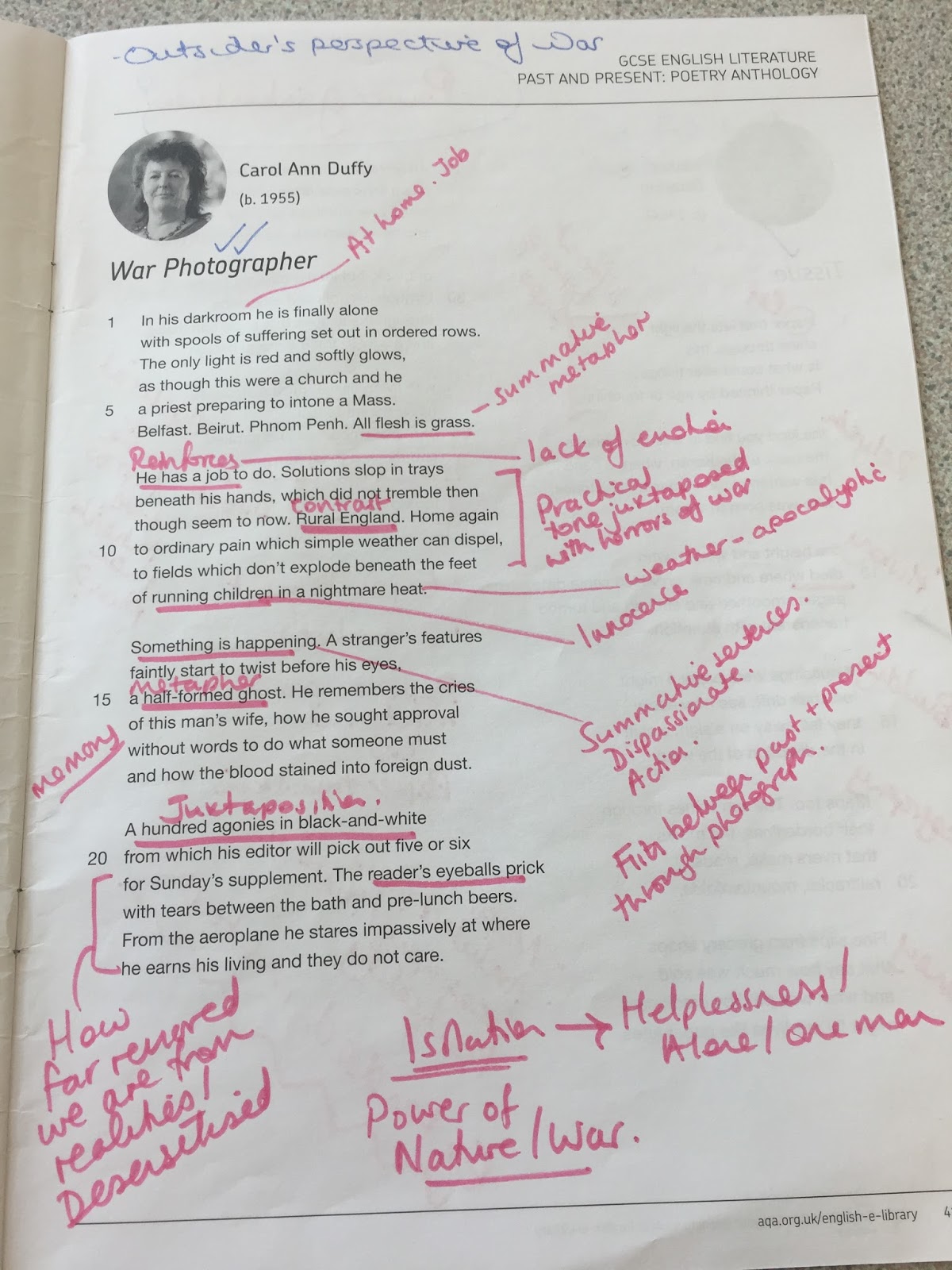
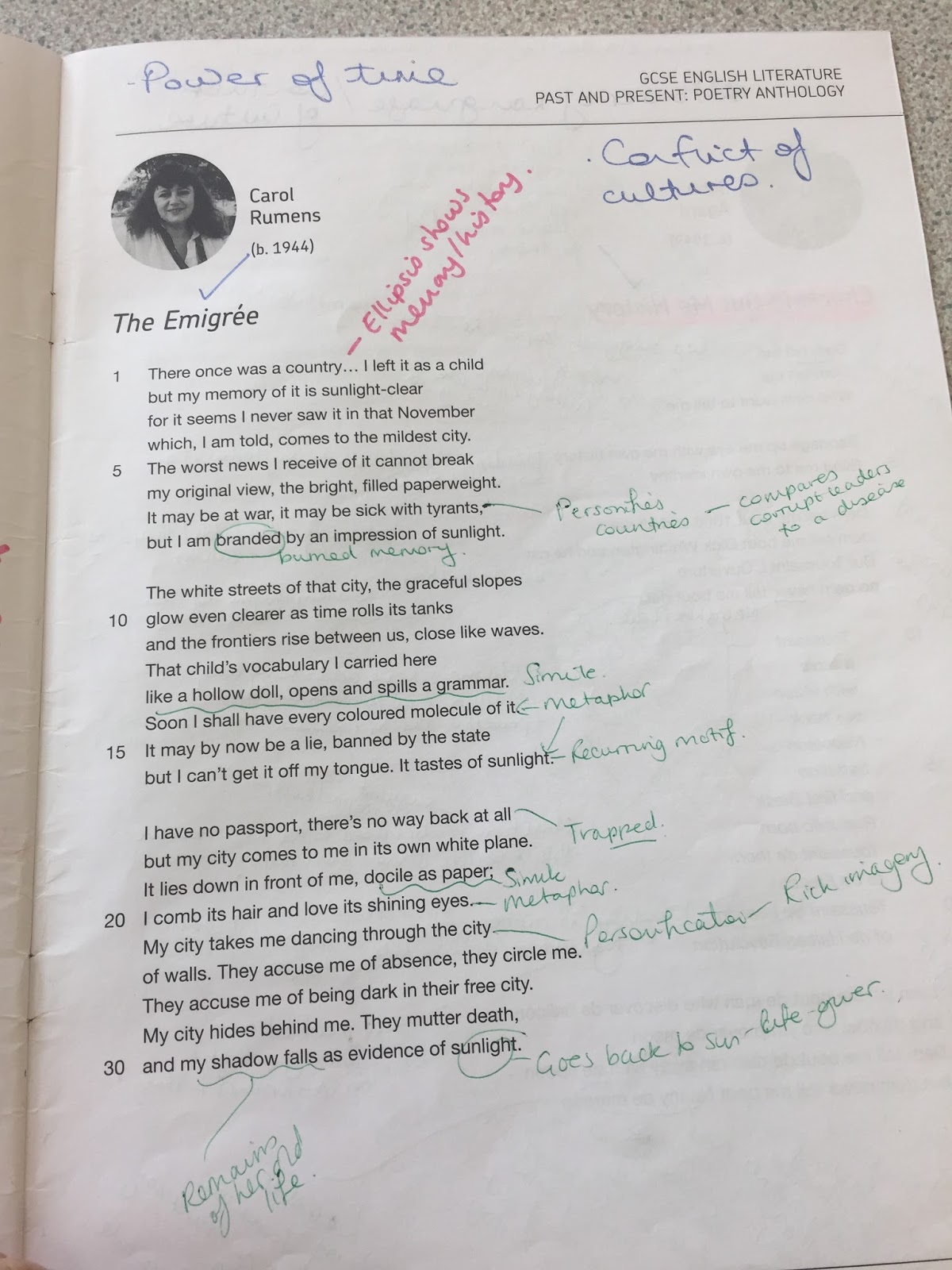
Can't tell your 'ofs' from your 'offs' or your 'theirs' from your 'theres' Or your verbs from your pronouns????
Well, you need to smarten up your vocab and your cultural capital quick smart because you are running out of time.
However, I am here to help so have a look and let me know if there is anything else I can add...
Hunger Games extract
Use this for tips - how is it written to sound exciting? What techniques has the author used that you could steal for Paper 1 question 5? What language and structural techniques could you pick out if this was your extract for Reading?
Well Year 11 - if you don't know your Inspector Calls quotes by now...then you will learn your lesson in fire and blood and anguish...
Here is some help to get you through that pesky exam. Remember,
Arthur Birling is pompous,
Sybil Birling is worse,
The Inspector comes to shine a moral light
And let the family know they are cursed.
Arthur wants to keep his knighthood,
Sybil denies all blame,
Gerald seems to take some responsibility,
But he's a Capitalist just the same...
They all contributed to the death of Eva Smith,
who represents the poor in society
All Arthur and Sybil care about
Is reputation and Edwardian propriety
But their children Eric and Sheila
Are able to show remorse.
This hints to the audience
That they might follow a different course
And if they adopt socialist views
Instead of the Capitalism of their folks,
They might avoid the Fire and blood and anguish,
of which the Inspector spoke.
There's a poem I just made up about An Inspector Calls to help you remember the plot.
Try making your own - coming up with rhymes will help you to re-think your arguments and points.
Try it for structure and stage directions and themes and quotes as well as characters :)
If you want to watch a version to remind you, there is a BBC version (older one) available on YOUTUBE: Inspector Calls full
If you google Inspector Calls on youtube there are also plenty of clips, analysis videos, character info and quote videos / raps etc.
Also have a think about using www.slideshare.com and www.sparknotes.com for more!
Underneath my personal recommendations are the books that EVERY young adult is supposed to read...again, have a look and regard or disregard! ENJOY.
They say never judge a book by its cover - but check out these three beautiful book covers! (above)
MY TOP TEN YOUNG ADULT BOOKS (that I enjoyed when I was your age)
Runaway Summer by Nina Bawden
Homecoming by Cynthia Voigt (first in a series of books about the Tillerman family. When their mum leaves them in a car park, Dicey has to find a new life for herself and her siblings)
Fox's Feud (Animals of Farthing Wood series) by Colin Dann
The Silver Sword by Ian Serralier
The Phantom Tollbooth
Tiger Eyes by Judy Blume (great teen romances, mainly aimed at girls!)
Jacob Have I Loved by Katherine Peterson
Howl's Moving Castle by Dianna Wynne Jones (she was the original JK Rowling - everything she writes is brilliant)
Anything by Christopher Pike - he writes horror books for young adults and I gobbled up anything by him. His adult sci-fi books are also excellent.
Flowers in the Attic - Virginia Andrews (a bit disturbing! About children whose mum and grandma keeps them locked in an attic to hide them from society)
The Seance by Joan Lowry Nixon
Brother in the Land - Robert Swindells
Ask me if any of these take your fancy - I have all my old books still :)
MY TOP TEN BOOKS OF ALL TIME
Pride and Prejudice by Jane Austen
Wuthering Heights by Emily Bronte
Jane Eyre by Charlotte Bronte
To Kill a Mockingbird by Harper Lee
Travels with Charlie by John Steinbeck
The Moor's Last Sigh by Salman Rushdie
Count of Monte Cristo by Alexandre Dumas
The Stand by Stephen King
The English Patient by Michael Ondaatje
The Constant Gardener by John le Carre
A Prayer for Owen Meaney by John Irving
A Heartbreaking Work of Staggering Genius by Dave Eggers
Harry Potter and the Goblet of Fire - J K Rowling
The Screen play of Withnail and I by Bruce Robinson
Collected lyrics of Bob Dylan
Ok, ok so I know that's more than 10 but I got carried away and can't stop...
So...this week we have three more exciting authors for you guys to check out:
4) Charles Dickens
5) Agatha Christie
6) Roald Dahl
4) Charles Dickens: 1812-1870
The greatest novelist of the Victorian era, arguably. He was a social critic and writer of fiction. Most of his most famous books were written in serial form so they were published week by week with lots of cliff hangers and interesting twists. Have you seen the musical Oliver? That's based on Oliver Twist - the famous novel about an orphan who is born into poverty in a work house and finds a better life eventually, after many adventures including being taken into a street gang of pickpockets in London. Great Expectations is another novel featuring social mobility - a poor boy called Pip who saves a convict on a moor, to be rewarded by the convict later when he evades capture and makes his fortune. This book features the eerie Miss Havisham, star of the Carol Ann Duffy poem 'Havisham'. Numerous film and television adaptations have been made of Dicken's fiction, including up to date, modern versions, musicals and imagined sequels. What I like most about Dickens is how he uses names so cleverly - to suggest a character's personality or motives. These were especially good for Victorian readers who recognised hidden, 19th century slang in their names.
Examples include:
Mr. Bumble (Oliver Twist) You might first think Bumble got his name because he’s a bumbling idiot. Not exactly. Mr. Bumble is more bombastic than bumbling, which is why Dickens was probably thinking more of the word bumptious when creating his name. Bumptious is an obscure term for “conceited” or “swollen with pride”—a perfect description for a man “in the full bloom and pride of beadlehood.”
Scrooge (A Christmas Carol) Two theories surround Scrooge’s name: It could be based on the archaic English word scrouging, meaning “crushing or squeezing” (an apt reminder that Scrooge is a “squeezing… old sinner!”). More straightforward still, Scrooge could simply be a phonetic play on screw, a common 19th-century slang for a miser (apt again). But since both scrouging and screw come from the same linguistic root, both are technically correct.
Try some Dickens for yourself! There are some on my bookshelf in my classroom. I would recommend Oliver Twist as one of the most accessible.
5) Agatha Christie.
A clip from Poirot- one of the tv series' made of Agatha Christie's most famous characters
Now, Agatha Christie is such a personal favourite of mine that I actually run a Facebook group about Miss Marple, one of her famous characters: an elderly lady who acts as a detective! Agatha Christie is the most popular crime fiction novelist of all time...she is responsible for creating unforgettable characters such as Poirot (the fussy Belgian detective who is attuned to human character and able to pick up clues with his 'little grey cells'); Miss Marple and Tommy and Tuppence (don't let the old fashioned names put you off!)
These novels and short stories (of which she wrote more than 150) are easy to read, reasonably short and yes, old fashioned by today's standards (you won't find mention of an iPhone 7 or a computer) but they stand the test of time because of their ingenious plot twists and lasting characters who range from comic to jealous to bitter to devious criminals. Poison is her weapon of choice, with most of her novels featuring poison in some form.
http://www.agathachristie.com/
A great website with clips, books and so on. Check it out!
6) Roald Dahl is my favourite children's author.
He was around years before David Walliams but has a very similar style so, if you like Walliams, then you will probably like Roald Dahl. A Norwegian/English writer, he invented characters, creatures and words. Have a look below at some of the interesting new words that Roald Dahl invented :)
Roald Dahl wanted to create books for children that did not feature typical characters so he wrote books like Matilda that include parents who do not like their children, teachers who throw naughty kids over fences and lock them in cupboards...
Along with his children's fiction, Roald Dahl also wrote autobiographies, screen plays, poems and adult books.
Try a couple of these if you're interested:
-The BFG- now a major film - featuring a world of kid gobbling ogres in giant company.
-The Witches - a world where normal women are actually witches intent on wiping children out from the world. There are hints that suggest a woman might be a witch - they have square feet, blue spit and wear wigs. It is up to one small boy and his old grandmother to stop a devilish plot where the witches in England will turn all children into mice.
-Charlie and the Chocolate Factory - the story of Charlie Bucket, a poor boy who wins a golden ticket to be one of 6 children invited into the secret factory of Willie Wonka, the greatest sweet and chocolate maker in the world.
Metaphors cont - as promised, some metaphors to use in your own writing!
Metaphor Examples
A metaphor is a comparison between two things. This page contains 100 metaphor examples. I have separated the metaphors on this page into two lists. The first list contains metaphors that are easier to comprehend and identify. We will call these “easy metaphors,” though they may not be easy to understand. The second list contains fifty metaphors that are more difficult to comprehend. We will call these “hard metaphors.” Another way to consider this would be as a list of metaphors for kids and adults. Without further preamble, here is the list of easy metaphors: two unlike things not using the word “like” or “as” to make the comparison. Metaphors can be powerful, but they can also be tricky to identify at times.
Metaphor Examples for Intermediate Readers
The detective listened to her tales with a wooden face.
She was fairly certain that life was a fashion show.
The typical teenage boy’s room is a disaster area.
What storms then shook the ocean of my sleep.
The children were roses grown in concrete gardens, beautiful and forlorn.
Kisses are the flowers of love in bloom.
His cotton candy words did not appeal to her taste.
Kathy arrived at the grocery store with an army of children.
Her eyes were fireflies.
He wanted to set sail on the ocean of love but he just wasted away in the desert.
I was lost in a sea of nameless faces.
John’s answer to the problem was just a Band-Aid, not a solution.
The cast on Michael’s broken leg was a plaster shackle.
Cameron always had a taste for the fruit of knowledge.
The promise between us was a delicate flower.
He’s a rolling stone, and it’s bred in the bone.
He pleaded for her forgiveness but Janet’s heart was cold iron.
She was just a trophy to Ricardo, another object to possess.
The path of resentment is easier to travel than the road to forgiveness.
Katie’s plan to get into college was a house of cards on a crooked table.
The wheels of justice turn slowly.
Hope shines–a pebble in the gloom.
She cut him down with her words.
The job interview was a rope ladder dropped from heaven.
Her hair was a flowing golden river streaming down her shoulders.
The computer in the classroom was an old dinosaur.
Laughter is the music of the soul.
David is a worm for what he did to Shelia.
The teacher planted the seeds of wisdom.
Phyllis, ah, Phyllis, my life is a gray day
Each blade of grass was a tiny bayonet pointed firmly at our bare feet.
The daggers of heat pierced through his black t-shirt.
Let your eyes drink up that milkshake sky.
The drums of time have rolled and ceased.
Her hope was a fragile seed.
When Ninja Robot Squad came on TV, the boys were glued in their seats.
Words are the weapons with which we wound.
She let such beautiful pearls of wisdom slip from her mouth without even knowing.
Scars are the roadmap to the soul.
The quarterback was throwing nothing but rockets and bombs in the field.
We are all shadows on the wall of time.
My heart swelled with a sea of tears.
When the teacher leaves her litte realm, she breaks her wand of power apart.
The Moo Cow’s tail is a piece of rope all raveled out where it grows.
My dreams are flowers to which you are a bee.
The clouds sailed across the sky.
Each flame of the fire is a precious stone belonging to all who gaze upon it.
And therefore I went forth with hope and fear into the wintry forest of our life.
My words are chains of lead.
But into her face there came a flame; / I wonder could she have been thinking the same?
Metaphor Examples for Advanced Readers
Here are fifty more challenging examples of metaphors. The slashes indicate line breaks.
The light flows into the bowl of the midnight sky, violet, amber and rose.
Men court not death when there are sweets still left in life to taste.
In capitalism, money is the life blood of society but charity is the soul.
Whose world is but the trembling of a flare, / And heaven but as the highway for a shell,
Fame is the fragrance of heroic deeds, / Of flowers of chivalry and not of weeds!
So I sit spinning still, round this decaying form, the fine threads of rare and subtle thought.
And swish of rope and ring of chain / Are music to men who sail the main.
Still sits the school-house by the road, a ragged beggar sunning.
The child was our lone prayer to an empty sky.
Blind fools of fate and slaves of circumstance, / Life is a fiddler, and we all must dance.
Grind the gentle spirit of our meek reviews into a powdery foam of salt abuse.
Laugh a drink from the deep blue cup of sky.
Think now: history has many cunning passages and contrived corridors.
You are now in London, that great sea whose ebb and flow at once is deaf and loud,
His fine wit makes such a wound that the knife is lost in it.
Waves of spam emails inundated his inbox.
In my heart’s temple I suspend to thee these votive wreaths of withered memory.
He cast a net of words in garish colours wrought to catch the idle buzzers of the day.
This job is the cancer of my dreams and aspirations.
This song shall be thy rose, soft, fragrant, and with no thorn left to wound thy bosom.
There, one whose voice was venomed melody.
A sweetness seems to last amid the dregs of past sorrows.
So in this dimmer room which we call life,
Life is the night with its dream-visions teeming, / Death is the waking at day.
Then the lips relax their tension and the pipe begins to slide, / Till in little clouds of ashes, it falls softly at his side.
The olden days: when thy smile to me was wine, golden wine thy word of praise.
Thy tones are silver melted into sound.
Under us the brown earth / Ancient and strong, / The best bed for wanderers;
Love is a guest that comes, unbidden, / But, having come, asserts his right;
My House of Life is weather-stained with years.
See the sun, far off, a shrivelled orange in a sky gone black;
Three pines strained darkly, runners in a race unseen by any.
But the rare herb, Forgetfulness, it hides away from me.
The field of cornflower yellow is a scarf at the neck of the copper sunburned woman
Life: a lighted window and a closed door.
Some days my thoughts are just cocoons hanging from dripping branches in the grey woods of my mind.
Men and women pass in the street glad of the shining sapphire weather.
The swan existing is a song with an accompaniment.
At night the lake is a wide silence, without imagination.
The cherry-trees are seas of bloom and soft perfume and sweet perfume.
The great gold apples of light hang from the street’s long bough, dripping their light on the faces that drift below, on the faces that drift and blow.
From its blue vase the rose of evening drops.
When in the mines of dark and silent thought / Sometimes I delve and find strange fancies there,
The twigs were set beneath a veil of willows.
He clutched and hacked at ropes, at rags of sail, / Thinking that comfort was a fairy tale,
O Moon, your light is failing and you are nothing now but a bow.
Life is a dream in the night, a fear among fears, / A naked runner lost in a storm of spears.
This world of life is a garden ravaged.
And therefore I went forth, with hope and fear / Into the wintry forest of our life;
My soul was a lampless sea and she was the tempest.
How can you add metaphor, simile and personification into your writing without sounding silly? I would recommend looking at authors like Roald Dahl and David Walliams who use similes and metaphors very nicely indeed!
(see below)
Another recommendation is to follow this link and read this article from an editor about how to avoid bad metaphors and similes and use powerful ones like 'the children climbed up the backbone of their mother' which are very evocative and powerful.
Charlie and the Chocolate Factory Metaphors and Similes
"He was hopping about among the saucepans and the machines like a child among his Christmas presents." (107) (Simile)
This simile compares Wonka to a child on Christmas, and it accentuates his excitement over his work. Mr. Wonka is truly passionate about candy, chocolate, and all the amazing things he creates, and that is more clear than ever when the group steps into the Inventing Room. The choice to compare him to a child is significant as well, since this book is highly concerned with the distinction between child and adult. In a way, with his energy and enthusiasm, Mr. Wonka is nothing more than a large child himself.
"They were as shriveled as prunes, and as bony as skeletons." (17) (Simile)
This simile, appearing at the beginning of Chapter 2, characterizes the four grandparents in the Bucket household. The comparisons make it clear just how old they really are; however, the comparison to skeletons also emphasizes just how hungry they are, since no one in the Bucket house ever has enough to eat.
"How long could we allow this beast to gorge and guzzle, feed and feast?" (96) (Metaphor)
The Oompa-Loompa songs are full of figurative language used to characterize the naughty children. This particular metaphor is used in Augustus's song; comparing him to an animal, a beast, is the best way to describe him, since he eats nonstop and without any sort of manners. This gives readers a clearer picture of why Augustus's greed and gluttony is so terrible.
"The children are disappearing like rabbits!" (141) (Simile)
Mr. Wonka uses this simile at the beginning of Chapter 25, after three children have been eliminated and only Mike and Charlie are left. This particular choice of comparison is important because it makes a reference to magic and magicians, who pull rabbits out of their hats and then make them disappear. The use of language referring to magic is fitting in a factory like Wonka's, because often it seems like magic happens here, and Wonka is a magician himself.
"The elevator had shot right up through the roof of the factory and was now rising into the sky like a rocket." (170) (Simile)
The comparison of the elevator to a rocket emphasizes just how fast they are moving, and how quickly Charlie is climbing to the top with his good fortune, having previously been at the very bottom of society. His stroke of luck when finding the Golden Ticket has opened so many doors for him, and now, as fast as a rocket, he is rising up like a rocket, looking down at the world he left below.