Wednesday, 17 May 2017
Prelude
For those of you that were thinking of using Extract from Prelude as a secondary text (for comparison if it doesn't come up in exam)...then some ideas from today's lesson...
William Wordsworth -
The Poem-

+ watch this video which is very good on the themes and context reminders:
Prelude context video
William Wordsworth -
- Famous as one of the Romantic Poets - a movement of poets who wrote poems about the magnitude and awe-inspiring power of nature. Also concerned with exposing the ills of society and wrote social criticism to try and challenge symbols of authority and power (such as the church and the monarchy)
- Lost his mother when he was 8 years old and his father sent him away whilst he was young so the poem deals with these feelings of solitude and isolation
- Grew up in the Lake District, an isolated, rural and very beautiful part of England so he often wrote about the landscape's powerful beauty
The Poem-
- Explores the conflict between guilt and desire
- Autobiographical about a trip in a stolen boat to view a mountain in the darkness
- The poem has clear episodes within it - stealthily stealing the boat; determinedly making towards the mountain; the personification of the mountain (manifesting his guilt at stealing and his fear of nature?); terror and fear as he escapes and returns the boat. The final part of the poem is clearly melancholic and nostalgic in tone where he says that he never saw nature in the same way again (lost his childhood innocence / grew up) and he remained troubled night and day with the vision he had seen of the mountain striding towards him.
Wider themes - Loss of youthful innocence / Power and authority of nature / Wonder and beauty of nature / Mystical nostalgia / Isolation
+ watch this video which is very good on the themes and context reminders:
Prelude context video
Thursday, 30 March 2017
Blog Index- to help you navigate
Hello Year 11 (and 10)
If you would like to navigate your way around the blog, follow the below links to the bits you want:
I hope you find it useful and please let me know if there is anything you would like me to add to any of the pages :)
Thanks,
Miss Fowler
1) ROMEO AND JULIET REVISION- LIT PAPER 1
2) DR JEKYLL AND MR HYDE- LIT PAPER 1
3) POETRY REVISION- LIT PAPER 2
4) INSPECTOR CALLS - LIT PAPER 2
5) LANGUAGE PAPER 1 & 2 WORK IN PROGRESS
GENERAL READING AND BOOKS PAGE
IMPROVING YOUR VOCABULARY- LEARN SOME OF THESE!
RECOMMENDED READING LIST
AVOIDING CLICHE IN FIGURATIVE LANGUAGE - PLEASE READ
METAPHORS HELP
MY TOP AUTHORS 3-6
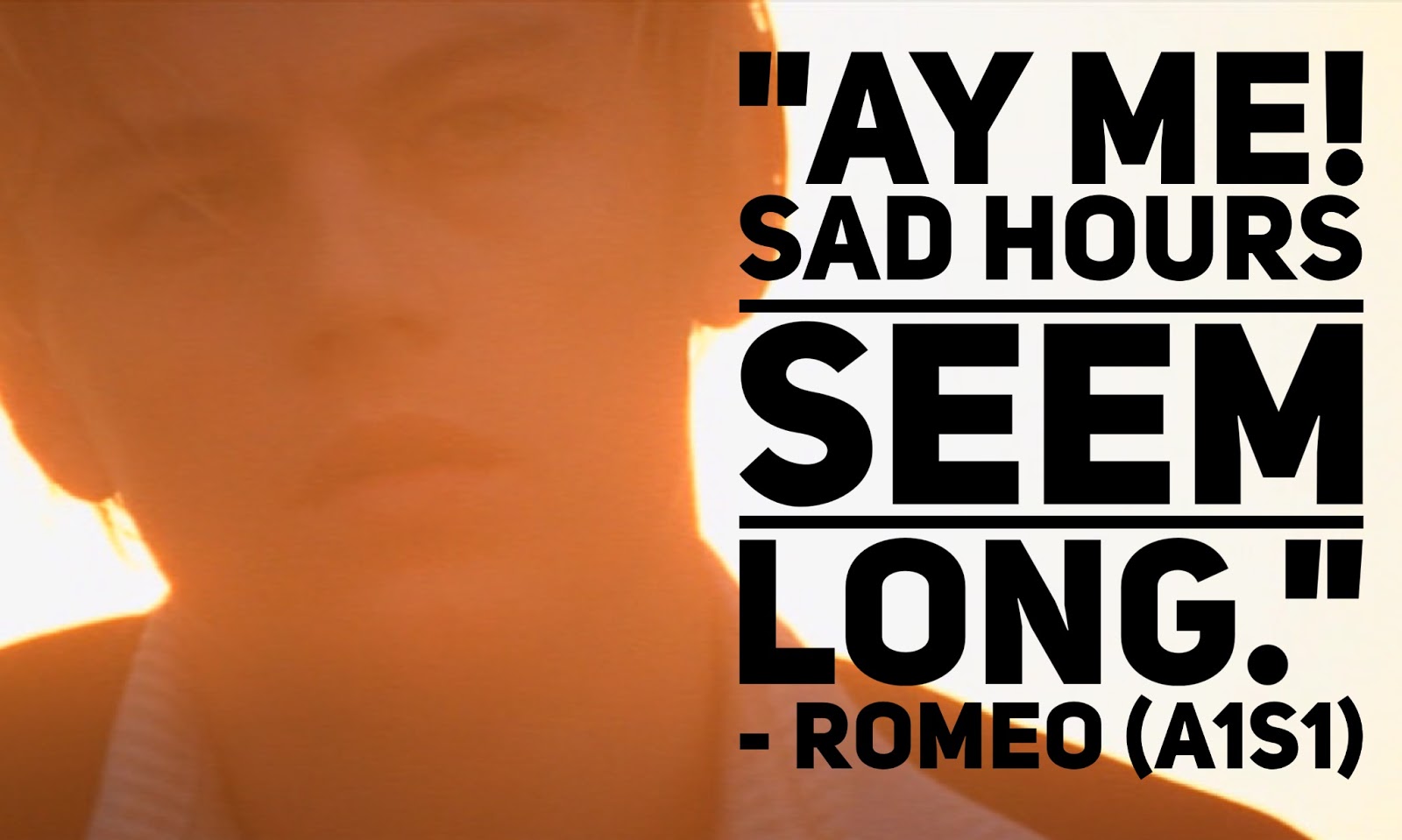
Romeo and Juliet revision
As promised, a Miss Fowler poem (bit dodgy with the rhyming this one!) where I try and clumsily retell the plot through poetry - try and do a better one yourselves!
I warn you, this one is a long one...
Miss Fowler's Romeo and Juliet poem
Some fun Romeo and Juliet raps to remind you of the plot:
How to answer the Romeo and Juliet question: My tip would be to label the two bullet points on the question a) and b)
eg Sample question:
To what extent does Shakespeare present Lord Capulet as a loving father. Consider how Capulet is presented:
- in this extract?
- in the play as a whole?
The question is worth 30 marks in total but this is divided into 15 marks for each part so you MUST ensure you spend about 25 mins on analysing, annotating and writing about the extract + 20 mins writing about the play as a whole.
AIM for the following
Part a) PELEW x 3
Part b) PEA EW x 3 *DON'T EXPLICITLY DISCUSS LANGUAGE FOR THIS PART*
POINT
- Makes a strong statement (topic sentence) - answer qu.
EVIDENCE
- 'Quote' that is powerful and supports POINT
ANALYSIS OF THEME
- Give your analysis/ interpretation/ inference
- Discuss how your quote proves your point from your topic sentence.
Make a structural comment (where it comes in
the play/ relevance to plot eg pivotal point/climax/denouement)
EFFECT
ON THE AUDIENCE
- What does the audience feel/ think/ imagine/ relate to the question?
WRITER'S
INTENTION (LINKED TO CONTEXT but a tip:
Context
should be embedded throughout, in P and A too)
NB If you get a theme question for the whole play, aim to write 3 paragraphs about how different characters highlight the theme. If you get a character question, aim to write 3 paragraphs about how that character is presented at the start, middle and end of the play.
Some extra thoughts:
- Don't forget that Romeo and Juliet is set over 4 days so the sense of urgency and 'lightning' fast love is emphasised by Shakespeare through this use of time.
- Settings are important - Verona itself as a city with the Prince as the authority who cannot seem to stop the long feud between two important families; the exterior / interior settings; the balcony scene where Juliet is elevated above Romeo; the two fight scenes; the taking of the potion (Juliet) and the taking of the poison (Romeo) and the tomb.
- There is so much FORESHADOWING in this play that it's ridiculous! Shakespeare uses a Greek tragedy style chorus for the prologue that precipitates all the violence and death and blames fate. Romeo's sudden and over zealous love for Rosaline precipitates his sudden 'love at first sight' for Juliet that is his downfall / harmartia. Also, the persistent references to death even at happy, loving times shows that death will ultimately prevail (which is why Death is personified so many times). Antithesis (opposites) abide in this play - Love and Hate, Night and Day, Montague and Capulet....this reminds us that everything is not going to be as it seems.
- Friar Lawrence is the character who seems to understand the problems with loving too passionately and too soon ('these violent delights have violent ends') YET he also facilitates their marriage so could he be blamed? He also comes up with the inventive yet risky plans that end with Juliet and Romeo dead.
- Juliet as a character can be seen to be the most DYNAMIC (changing) character in the play because she goes from a submissive girl to an independent woman over the course of four days, taking her own destiny into her hands (potion drinking and the mortal sin of committing suicide). She goes from obedient, dutiful daughter who wants to please her parents, to a rebellious teenager who lies even to her most trusted confidante, the nurse. However, please don't write Romeo off completely. He is not a static character - although it could be argued that he does have a history of falling in love with girls too quickly and based solely on their beauty! I would argue that he DOES change - from a typical, Petrarchan lover (talks in oxymorons, follows the formal rules of courtly love) to someone who treats Juliet as an equal partner. Remember, on his first meeting with her, he refers to her as a bird and a saint to be worshipped but this changes - later on, they BOTH refer to one another using bird imagery. At one point, Juliet says she wishes she were a hawker in charge of him. She also talks about selling herself to Romeo but also buying him as if he were a 'mansion'. The way they reflect each other's words and both make important decisions shows an equality that Romeo did not feel for Rosaline.
Revision Booklet Romeo and Juliet FOW
Elizabethan Context- Sheet
Extracts if you fancy having a go at annotating some extracts and answering questions on them
(questions for each extract given to you in class but available on request!)
Also see the following websites for some useful revision:
Spark Notes
Romeo and Juliet with modern translation next to text
GCSE Bitesize
York Notes revision cards
Revision of play GCSE and A Level
This website includes A Level notes so might help you push up to those higher levels!
You could also buy this with your pocket money-
Don't forget the Dramatic Terminology that will help elevate your answers:
- Dramatic irony- when the audience knows something that the characters do not eg Romeo and Juliet have got married in secret
- Soliloquy / Monologue - one character speaking to themselves / audience (insight / personal / true)
- Dynamic character- Changes throughout the course of the play (eg Juliet)
- Static character- Remains consistent through play eg Tybalt
- Foil character- The opposite of a character to draw attention to their characteristics eg Benvolio painted as peaceful to highlight Tybalt's choler
- Pivotal point- A turning point in the play
- Climax- A significant event in play eg Tybalt's death, R&J's suicides
- Denouement- The ending of the play
Some key scenes - if you're still with me -
Plot Synopsis
Meeting...holy palmers kiss...you kiss by the book, Romeo...
Death scene - Arguably Juliet is stronger as she stabs herself ("Oh happy dagger / This is thy sheath") whereas Romeo takes poison. A teenager girl determinedly committing suicide would be more shocking to the audience too as her gender was stereotyped as weaker and emotional. This unity in death also creates a staging that reminds the audience that this is a TRAGEDY.
If you are hungry for more Leonardo di Caprio then please come and borrow the DVD off me.
That's all, people! :)
Any questions - email me!
rfowler@greenford.ealing.sch.uk
"My devil had been long caged; he came out roaring." Everything Jekyll and Hyde!
Back by popular demand - Jekyll and Hyde!
I have made up another unique Miss Fowler special poem to help you to revise this text and here it is:
(Why not have a go at making up an even better one yourself with the quotes thrown in???)
Robert Louis Stevenson wrote this book in 1886
About a doctor who found himself in a fix
He thought you didn't get character traits
From your mum or your dad
Because every man is commingled
Of half good and half bad
Jekyll was ambitious not a moral man right through
He worked hard
To create a potion to separate the two
His friend Dr Lanyon disapproved of this tool
He preferred his medicine traditional and thought Jekyll was a fool
Utterson is Jekyll's upright sensible lawyer friend
He doesn't find out the truth until Jekyll's letter at the end
He goes for a walk with his friend Enfield in chapter 4,
Where they see a blistered and distained old door
This should have given them a hint that things were amiss
This is symbolism where THAT actually means THIS
So the door is Hyde and the stain is his sin
(It also provides him with a handy way out and in)
Other motifs include the cruel London fog
That covers his misdeeds under the smog
Just in case things don't get any better
Jekyll has written everything down in a letter
That says Jekyll was successful in becoming wholly grim
But the problem was that this badness started to dominate him
To the point where his immoral, nasty evil side
Took on its own persona that he christened Mr Hyde
Who sneaked out of the back door (quite a convenient set up)
To commit crimes without remorse due to his new DNA get up.
Eventually bad things have a way of catching up to you...
And Hyde was suspected of killing a nice old man named Carew
So Hyde hid (get it?!) inside Jekyll, left the potion on the shelf
And tried to be religious, be sociable, his former good self
Unfortunately being naughty is a lot more fun to do
But people from society will judge and condemn you,
You just can't get away with it if you're from the upper class
So it wasn't long before Jekyll was reaching for his glass
Hyde didn't appreciate being locked in a cage
And when he came out again he was bursting with rage
He didn't want to be half when he could be whole
And Jekyll was finding Hyde harder to control
There are lots of settings in this Victorian story
Such as alley ways, fog, London and a laboratory
All of these tell the reader that it's going to be a gothic tale
So we can foreshadow that Jekyll's good intentions will fail
And when he cannot control the monster inside,
He starts to inconveniently accidentally turn into Hyde,
The potion he needs to make stronger and stronger,
Or he'll remain his bad self for longer and longer
Eventually just when you think Hyde might be winning the fight,
Jekyll appeals to Lanyon in the middle of the night,
Seeing him transform from hideous beast into his friend
Proved for Lanyon too much and he meets his end,
Jekyll can't get the ingredients he needs for his task
The butler Poole sees Hyde's face and assumes it's a mask
So he gets Utterson and they break down the door
Only to find Mr Hyde dead on the floor
Did guilty conscience kill him or was it Jekyll's last win?
Was it the cowardly fear of being hung for his sin?
Whatever the motive, Don't forget Jekyll's letter
Explaining what happened and how he wanted to be better
And create a world where people are all wholly good and upright
But he played God and proved that suppression just isn't right
So is Mr Hyde a symbol for all of our hidden desires?
Does he mean inside us all we are hypocrites and liars?
Or is he symbolic of Victorian fears of the other?
Was Hyde just a sort of naughtier younger brother?
So what was the overall lesson the reader learned?
"Don't mess with human nature or you're going to get burned"
You already have your revision guides which have everything you could possible want and desire - plot summaries, character summaries, key quotes and practice questions.
Here are some more links in case you missed anything in class:
- Exam Help
Tips for tackling the essay in exam
- Exam prep - practice papers (extracts + whole novel questions)
Conflict
Duality
Duality again
Evil
Morality
Secrets
- Revision Booklet - everything from key quotes to plot to characters. REVISION BOOKLET
- Key QUOTES QUOTES
- More exam prep - revision notes
- Themes Themes and context
- Here is a powerpoint that will help you prepare in run up to exam: Power Point on Assessment Prep - Jekyll
Here are some notes on CONTEXT that will be useful:
Victorian
Times – Context Page
- · Class division was prominent and the status quo was maintained by keeping the wealthy rich and the poor in a state of deprivation. Very wealthy upper classes with privilege and a huge gap between them and the poorest who were living in extreme poverty. Unequal wealth distribution.
- · Industrial revolution – changing times. More people moving from rural farm land into the cities where jobs and industry were growing. Rise in population and rise in child labour and unfair working conditions. No benefit system = very little help for poor, ill and old. No rights.
- · Higher crime rate as cities became overpopulated. Also disease and dirt spread.
- · Tension between religion and science
- · Drugs and prostitution rife amongst the poor AND rich, although the wealthy had to try and hide their immorality by maintaining a public façade of morality and reputation.
- · Repression of numerous immoral desires eg homosexuality, extra-marital affairs, drug addiction.
- · Importance of reputation and status was paramount in society and dictated the way other people thought of you.
- · Fear of encountering the outside world especially from the rich who saw the outside world as diseased and dangerous. They were scared of anyone who was not like them; fear of the ‘other’ and of the unknown.
- · During Victoria’s reign there was huge expansion in the Empire. This led to England becoming globally powerful and the rise of Capitalism (desire for personal wealth and ambition to do well in business and make a profit through industry)
Subscribe to:
Posts (Atom)