Monday, 30 October 2017

Brap Rap Rap! Poetry quotes

Hello Year 11!

Welcome back to Power and Conflict

As cringe-inducing as it might be to think of writing a song or a rap to help you learn plot / key themes and key quotes, it is a great way to order your thoughts and get yourselves focused on the essentials for each text (given that there are so many exams and you don't have your actual texts so memory is key!)

Here is Mr Bruff in action to help you:


Please do your own and feel free to share in the Comments!

Monday, 2 October 2017

ANIMAL FARM

Image result for Animal farm

Animal Farm Revision Notes - Year 11

Key Words: Use in your essays
  • Dictator / Dictatorship
  • Mass revolt / Revolution
  • Corruption
  • Self-sufficiency / Self-determination
  • Deceit
  • Religion
  • Utopia / Utopian ideals / idealistic
  • Despotic rule
  • Proletariat (the 'workers')
  • Propaganda
  • Rhetoric (persuasive language) and Rhetorician (Squealer)
  • Aristocracy / Bourgeoisie
  • Hierarchy
  • Animalism
  • Analogy / Allegory
  •  Satire
  • Irony
  • Loyalty
  • Unity
  • Illusion / Disillusion / Delusion
  • Idealistic
  • Betrayal / lies and half-truths
  • Totalitarian state
  • Egalitarianism
  • Fascism
  • Delineated Class system
  • Op-positional forces
  • Collective independence
  • Contextual
  • Inferiority / Superiority
  • Prosperity
  • Intellectualism
  • Ideological 
  • Politicise
  • Socialism & Capitalism&/ Communism
  • Marxism
  • Economics
  • Emancipation (freedom)
  • Futility (pointlessness)
  • Oppression and Supression
  • Manipulation
  • Machination
  • Oration
  • Democracy & Plutocracy & Dictatorship
  • Hyperbole / Exaggeration / Superlatives
  • Hypocritical / Hypocrisy
  • Intermediary
  • Scapegoating
  • Exile / Expulsion
  • Utilitarianism
  • Anthropomorphic
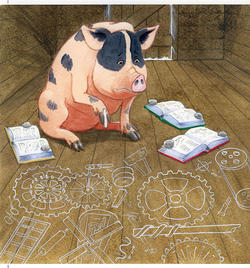
Image result for Animal farm

Key Themes
  • Power and Control
  • Equality and inequality
  • Politics
  • Friendship
  • Education
  • Terror
  • Information 
  • Propaganda

Key Structural Points

  • Conventional third person narrative - omniscient narrator. This keeps Orwell's position at a distance from the narrative so his opinions are implied in other ways, such as through his use of satire and allegory. 
  • There are 10 chapters so it follows an episodic, linear structure. This allows us to witness the disintegration of the new regime and its fall into immorality as it happens. 
  • Irony is a dominant feature of the novel, for instance when Napoleon advocates the windmill as his idea when he has actually weed on the plans to show his disdain.
  • Repetition of language and motifs e.g 'Beasts of England' the anthem which is used for conveying different messages throughout the novel. Also the maxim 'Four legs good, two legs bad' which also changes its meaning as Napoleon starts to adopt human characteristics. 
  • The Commandments are used structurally in the novel with many chapters ending with the destruction of distortion of one of the rules. Ultimately, the pace of this quickens and in chapter 10 we see the last few commandments ignored or broken within two pages. 
  • Look how the weather is also used at the beginning of chapters to suggest the farm conditions are becoming more harsh and unforgiving. 
  • The story is cyclical in terms of the animals at the end being in a similar dire situation to the beginning - reflecting Orwell's own views on political corruption and his own disaffected view of revolution - whilst he agreed with the principles of revolution, he did not see it working. 
  • Use of satire / humour and ridicule to draw our attention to the problems of unequal societies and to criticise politicians and leaders. 
  • Allegory was necessary as the book was published in 1943 at a time when Russia had been helping England in the Second World War. Anthropomorphism also enables the farm to serve as a microcosm for the Russian regime. 
  • Fairy story tropes are mocked with recurring images / motifs of negativity. 

Key Characters

Image result for animal farm napoleon   NAPOLEON
WORDS: Duplicitous, corrupt, evil, arrogant, cunning, manipulative, cruel, ambitious, totalitarian, controlling, dominant, aggressive, underhand, cowardly, selfish, self-absorbed. 

EVENTS: Reputation for getting his own way, uses Boxer for his work ethic and uses the dogs as means of controlling the other animals (takes them as puppies which shows his strike for power is premeditated), controls the food source (e.g milk, apples, eggs), starts to 'deal' with the human enemy for his own gains, shows a lack of empathy for Boxer, expels Snowball so he can have a totalitarian state, is not directly involved in any fighting ('nowhere to be seen' during the iconic Battle of the Cowshed), perverts the meaning of the Commandments more as the book goes on. 

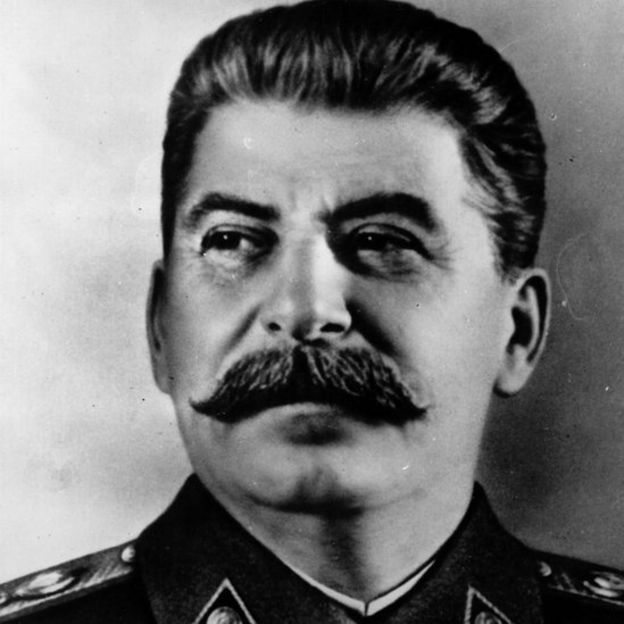
Image result for stalin
  • Representative of Stalin: puts self above state, punished enemies, killed and tortured political opponents, rose to power through ruthlessly dealing with opponents and having Trotsky exiled.
  • Orwell called Napoleon: 'Barbaric and Undemocratic' and said, "Nothing contributed so much to the original idea of Socialism as to the belief that Russia was a Socialist country."
  • Used the allegory of a farm yard to deliberately mock political leaders. Subverted the 'fairy story' motifs through animal characters committing unspeakable acts such as holding show trials and sacrificing Boxer. 
  • Napoleon can be compared with Old Major as two very different leaders: Old Major wanted equality and to preserve the animals' dignity and provide them with education. Napoleon wants to convince the animals that these are also his ideals when, in actual fact, his regime is suppressing their freedom and he rules them through cunning, deception and fear. 
  • Is indicative of the 'power corrupts' maxim as he changes the meaning of key words on Animal Farm such as 'Comrade' and 'equality' for his own ends, eventuating in his transformation into the humans (climax of chapter 10 where you cannot tell the difference between the two)
  • Uses a mixture of fear and intimidation (threat of dogs, getting rid of Snowball), rhetoric and persuasion (Squealer), self-promotion and aggrandising (setting himself up as 'Leader'),  cunning and deception (lying about the windmill and taking credit for Snowball's ideas) to establish and maintain control. 

Image result for animal farm Snowball  SNOWBALL
WORDS: Inspiring, Courageous, Idealistic, Naive, Democratic(?), Preeminent, a leader, intelligent, vivacious, charismatic, compelling, appealing, aspirational, ambitious, shrewd, innovative. inventive, sociable, superficial?, strategist, mythical figure, hypocritical, eloquent, idealist. 

EVENTS: He is the source of the windmill idea and the maxim 'Four legs good, two legs bad' which reveals his intelligence and innovative personality. He tries to put the rules into action by having them written on the wall. He is undermined by Napoleon showing force is perhaps more adequate means of control than ideas and ideology. He DOES energetically promote revolution and tries to educate the animals BUT he also condones the stealing of the best food for the pigs showing he undermines his own calls for equality and believes the pigs to be superior. He is brave in battle (unlike Napoleon) and is a planner. When he is exiled, he is made a scapegoat for all the evils of the farm and is connected to Mr Jones as a mythical figure representing what was wrong in the past / the threat to the so-called 'stability' of the new regime. 

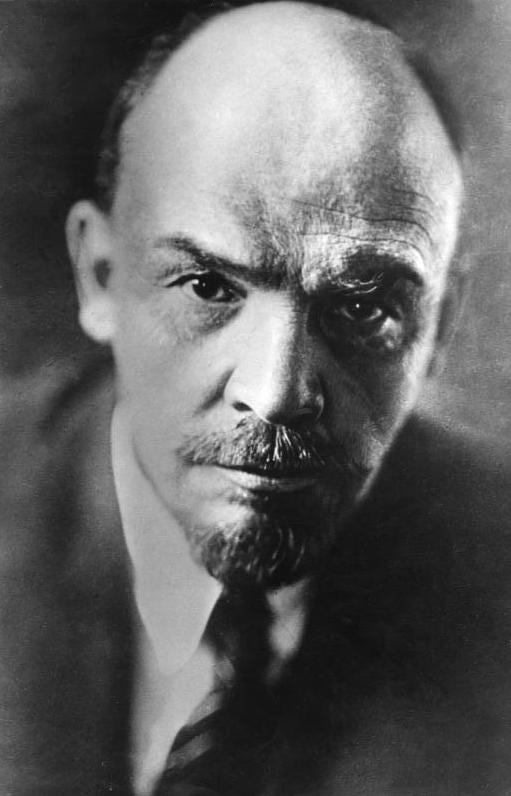
Bundesarchiv Bild 183-71043-0003, Wladimir Iljitsch Lenin.jpg
  • Representative of Lenin (who was in power in Russia from the Revolution in 1917 until 1924 when he died). He was an ideologist, a political thinker, a stirrer of rebellion and a firm Marxist. He believed that the Capitalist status quo - an egalitarian state with the power in the hands of the wealthy bourgeoisie at the expense of the poverty stricken proletariat - would be overthrown by a proletariat revolution and Socialism would rise. Like Lenin, Snowball firmly believes in the power of the 'people' and in education as a tool to increase the power of the masses.                                                                                Image result for Trotsky
  • Also representative of Trotsky - Stalin's political ally and then opponent who was exiled after leading an uprising against Stalin in the 1920s. Snowball is similarly exiled in Animal Farm and this exile marks a turning book in the novel where the farm begins to decline and lose its intellectual focus. 
  • Orwell has spoken of Snowball, saying that his name is supposed to be ironic because he paints himself as 'whiter than white' in terms of his morals BUT he is in fact hypocritical and just as self-serving and personally ambitious as Napoleon in some ways. 
  • He is very eloquent (good speaker) and his speeches have the ability to stir feelings of revolt in the animals. However, he fails to notice Napoleon's gathering of force and is ultimately unable to secure power, thus perhaps proving that eloquence can only get you so far. 
  • He is an idealist and can be criticised for failing to recognise the failings of the animals, for instance he advocates education for all but some of the animals (such as Boxer and the sheep) cannot get far with their education. Napoleon is arguably more shrewd and intuitive as he recognises that animals also need to be ruled by a leader.


COMING NEXT WEEK:
1. Old Major and Boxer character studies. 
2. Writing a powerful plan and thesis statement. 
3. Quoting successfully. 


If Comrade Fowler says it, it must be right... :)


Monday, 26 June 2017

Poetry Revision - Context and Quotes sheet

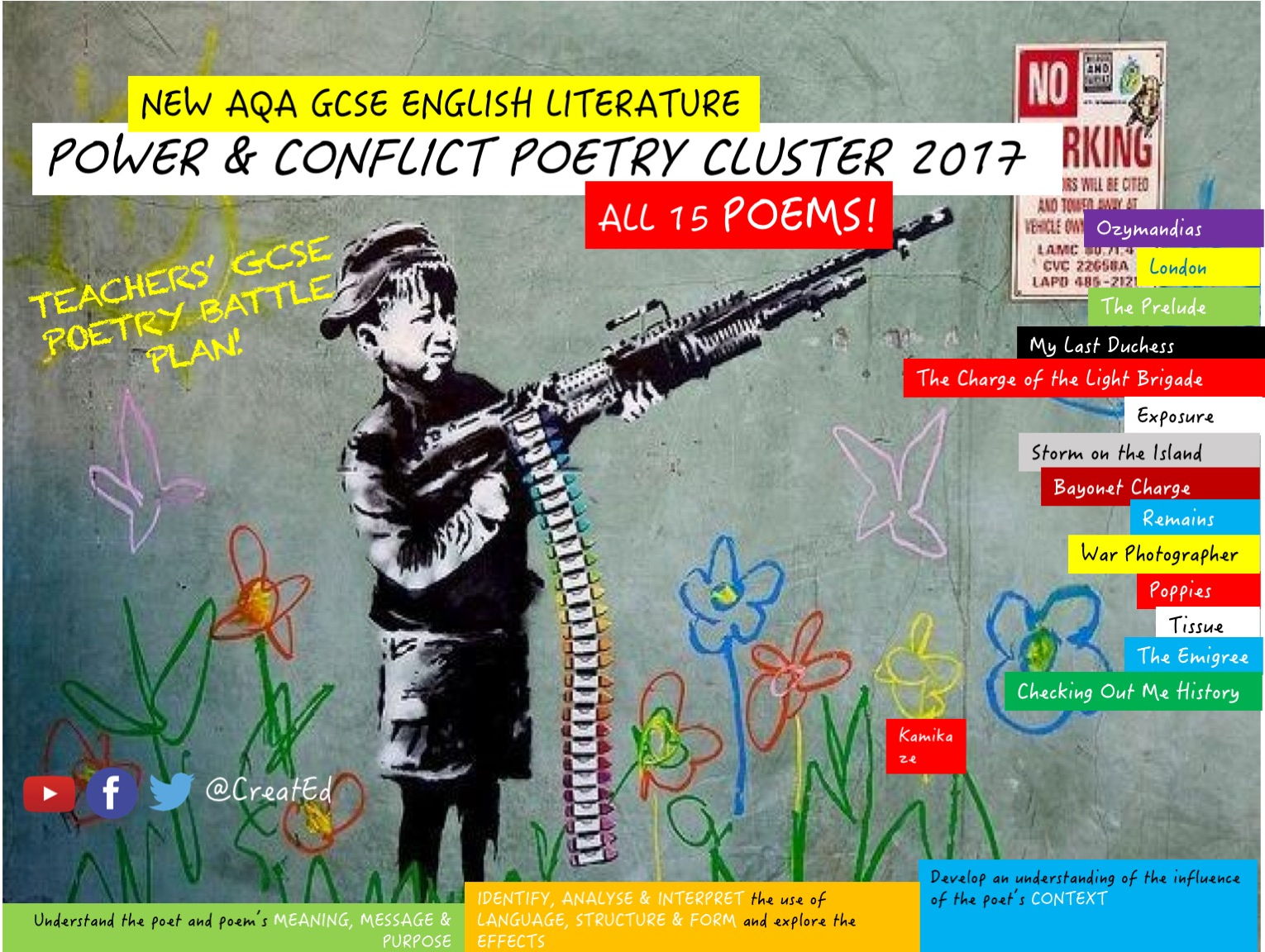
Image result for power and conflict

Image result for power and conflict

Click on this link for Power and Conflict booklet on ALL POEMS:
Power and Conflict booklet

Context and Quotes sheet:
SHEET


Miss Fowler :)

Comparisons you can make - links between poems

Comparisons & Contrasts you can make: Nature
1.      PRELUDE
·         CF Exposure- both explore the harsher sides of nature, although Exposure is about the cruel, relentless aspect of nature (indifferent to man’s suffering) whereas Prelude is more about nature’s potential for evil and superiority due to its power. Both also focus on first person narratives but Exposure is immediate, in the midst of war and exposure to terrible weather, whereas Prelude is calm and more connected to the psychological impact nature can have on man through memory. Both poems personify nature as a dominant force over man, one to be feared as well as marvelled at. In Exposure, it seems that Owen questions a higher power and authority (God? Nature? Officers?) and sees soldiers as insignificant (‘nothing happens’ even though many evidently die and are buried) whereas Prelude, the narrator sees himself as insignificant (and by implication, all of mankind) and nothing really happens to disturb his calm experience other than the manifestations of his own guilt and fear.
·         CF Ozymandias – both explore the powerlessness of man and time in relation to nature. In Ozymandias, man’s power (even tyrannical, arrogant and connected to monarchy) pass with time whereas nature endures and seems indifferent to man’s suffering or superiority. This is a common belief held by Romantic poets. Both use imagery to under-line the beauty of nature (the boundless sands, the exotic ‘antique’ land suggesting history and time enduring in Ozymandias; the ‘elfin’ magic of the boat in Prelude and the calm stillness of the water where he dips his ‘lusty oars’. The effect of time is explored through memory and the effect of the boat stealing incident in Prelude, whereas in Ozymandias time is the enemy of the King and reduces his might and kingdom to insignificance. All of us are equal in the eyes of mother nature / God? It is nature we should worship, not self-indulgence. Man’s reputation is transient and ultimately we are all isolated and alone. Ozymandias can also be compared to Exposure because the two are about the passage of time and the linking of nature to a more enduring force that ultimately seems indifferent to the suffering / pride of mankind.
·         CF Storm on the Island – Both feature nature’s unpredictability and penchant for cruelty. Storm on the Island uses juxtaposition between emptiness and lack (‘nothing’ and ‘n’ and ‘nor’ and the words ‘empty’ and ‘space’) with words suggesting action and invoking military imagery: ‘salvo’ and ‘explode’ and ‘strafe’ and ‘bombard’. This suggests that the islanders waiting for a potential storm to hit is an allegory for a real war (the ‘troubles’ in Ireland). The irony of the situation is the ‘huge nothing’ that they fear – fear itself which is controlling their lives just as war does. The waiting element of Storm on the Island could be compared with Exposure and the idea of numbness (nothing) and emotional hardening of men who spend a long time in fear. The use of the collective pronoun ‘we’ is used both in Exposure and Storm…to suggest the collective identity / sense of community / emphasise that it is man versus nature. One long stanza emphasises the storm – preparation and then waiting for it to attack – just as Prelude keeps one long stanza to act as a narrative and reflect the narrator’s lack of control.
·         CF Kamikaze – The different narrative strands / layers of Kamikaze shroud this narrative in mystery – we are never quite sure who is talking or how reliable they are. The use of memory is prevalent (as in Prelude) and how this has psychologically affected the speaker and her mother (the tales of the glory of war are lived through one individual but he is now remembered through the prism of stories rather than knowledge of his own feelings- there is speculation ‘he must have felt…’) Use of natural imagery to capture the wonder of the world that perhaps helped him to turn back – also the idea of child versus adult world ‘we too learned to be silent’ and now she regrets treating her father in this way. The isolation of man from nature (Prelude) and from community and belonging (Kamikaze). How one experience can shape your life and perceptions, and the perceptions others have of you. Reputation is also explored along with honour and glory in Ozymandias.


Poetry PPE Help - Year 10

Hello Lovely Year 10

In preparation for your PPEs, here are some examples of how to compare effectively:
Below is a colour coded example to show you how to integrate context, comparison and language/structural explanation into your question answers:

Compare the ways writers present the power of nature in the “Prelude” and one other poem from the collection.
The power of nature is portrayed as a dominant force that ranks above all men and beings. Nature possesses dominance and it influences man as we are unable to totally control it or comprehend it. In “The Prelude”, William Wordsworth suggests that man attempts to control nature but consequently is taunted by nature itself. In comparison to this in “Ozymandias”, Percy Shelley suggests an exploitation of man’s arrogance that is destroyed by nature- proving both Romantic poets convey nature is a significant force above man.
In “The Prelude”, Wordsworth portrays the power of nature as wanting dominance over man. This is similar to “Ozymandias” by Shelley who mocks the arrogance of man in the face of nature’s power. Interestingly, the natural power to destroy in “Ozymandias” contrasts to the psychological power of nature to haunt humans. Wordsworth powerfully suggests that nature has the power to change and affect man’s mental stability: “no colours or green fields”. The contradiction of “no colours” and “green” suggests nature has the ability to cause confusion and inflict fear into man. Wordsworth has been deliberate in claiming that nature cannot be comprehended by man as his narration conveys difficulty in understanding even the simplicity of nature- even its green colour. The fact that Wordsworth states “no” colours suggests a conclusive rejection of man by nature. This is also conveyed by the anaphora of “no” in the final line that ultimately concludes that nature has abandoned man once and for all. This abandonment of man by nature is a typical trait of a Romantic poet.
Furthermore, man is clearly haunted by nature when the narrator states “Like living men, moved slowly through the mind”. The personification of nature could be purposeful as Wordsworth is suggesting that at nature will always prevail as dominant. Also the comma that isolates “living man” in the line visually conveys the brutality of nature’s abandon. Also, the deliberate use of the adverb “slowly” suggests nature is acting in a sinister manner that lurks and takes over the mind of man- asserting its dominance. In comparison, Shelley presents the power of nature as always overpowering man and destroying human attempts to assert their control. Shelley is deliberate in structuring his poem like a sonnet - a form traditional to a love poem- to suggest the irony of man’s own self-love. In the opening line of the poem: “I met a traveller from an antique land”, the narrator speaks of the man in the past tense shown by the very “met”. In a similar way to “The Prelude”, this could suggest the abandonment of man. Interestingly, the first 6 lines are written in the past tense and remaining 6 in the present tense, highlighting that nature is powerful throughout time. The quotation “nothing besides remains” is the most crucial point in the poem as it suggests that nature’s force is permanent. This is because nature brutally causes “a colossal wreck” and this oxymoronic phrase suggests man will always be destroyed by nature. This magical power given to nature by Shelly is also a typical trait of a Romantic poet. Both Wordsworth and Shelly have conveyed that nature can cause destruction to man psychologically as well as physically.


Key

Umbrella Point / Introduction: introduce your two poems and two poets. Answer the question. This over-arching point will inform the rest of your essay.

Contextual information.

Topic Sentence- bolts your ideas down and returns to the question and the over-arching points you have made in your introduction.

Intentions of the poets / Effect on reader / World view – sort of like mini conclusive statements where you give your opinion on the wider message of the poem (why it was written)


Comparative language

Advice for revising Poetry

Have a look at the blog and the index will take you to my year 11 poetry revision:
PRELUDE
Annotated poems
How to compare poems one idea
(please note this refers to Character and Voice from old spec. It's now CONFLICT AND POWER)

There is some stuff about poetry there and I will add some more tonight that is relevant. Try revising them all using STIFF on revision cards:

SUBJECT- What is the poem literally ABOUT? What is the underlying / inferred / hidden meaning? What is the poet's intention with writing this poem? Try and sum this up in one line with the themes eg Shelley wrote Ozymandias in order to draw our attention to the majesty of nature and its longevity in comparison to the reputation of man.

TONE- Is the tone predominantly nostalgic and wistful? Celebratory and triumphant? Melancholy and regretful? Positive or negative? Juxtaposition of both? What is the tone at the start and the end? Eg Checking out Me History changes from angry and confrontational at the start to reclaiming identity in a triumphant and personal way at the end.

IMAGERY- Look for three really decent language quotes - main ones. Look for figurative language, emotive language etc. Then add any small words as secondary quotes eg if you have identified personification of weather in Exposure, there is a lot more of this later on. So add 'secondary' short quotes.

FORM- Two structural points that you can use to reinforce your ideas about the poem from the 'S' subject part - is there enjambment / caesura / regularity or irregularity? Any lines on their own isolated? Any interesting or unusual stanzas? Why? + Effect.

FEELING- What is the overwhelming feeling at the end of the poem? What is the message that the poet wants us to go away with? What emotions are dealt with in the poem? How do these emotions add to our overall feelings? (Personal opinion- what you think!)

Go on to Slide Share- www.slideshare.com and start an account - it's free! And having an account means you can download any useful power points. Then search for the poem that you want to revise and all sorts of useful stuff comes up from teachers and other students.

Also check GCSE Pod (I think your login is your school email and password 'greenford' unless you have been given another) as that has videos and interesting debates etc for each poem. Also if you go into Youtube and type [POEM NAME] BBC Teach into the search bar, there are a lot of short videos made with the poets that sheds light on their motivations and intentions. 

Friday, 9 June 2017

Final Help - Last Exam- Language Paper 2

A reminder: 


Here is the strategy for Paper 2:

1) Read all the exam paper starting from the information on the outside. This will give you hints about the tone of the two extracts (look at the titles), the times that they were written in, the subject matter and the authors.

2) If you have time, try and jot down timings on the front of your paper and your acronyms.

3) Read the questions. Use your highlighter to pick out the KEY parts. This will inform your reading of the extracts and make you better at annotating as you read. Any lines that are given to you for certain questions, isolate those lines and write the question next to them eg the part for question 1 and question 3.

4) Read the extracts. Make sure you DO NOT SKIM them but read every single word. Remember that you might get misled if you don't read it or understand it properly so look for key words like 'instead' and 'otherwise' to hint that the writing is going in a different direction.

Use your COMMON SENSE (if you have any!) - if a piece of writing describes a street as silent and peaceful and then says 'unlike the conventional noisy cities where the traffic crashes constantly' then the key word is UNLIKE. Don't fall into the trap of skimming and focusing in on the words 'crashes' and 'noisy' and ASSUME this is a negative depiction of a city. This is saying that the place is UNLIKE a busy city...therefore it is calm...

5) When zooming in on language, remember to identify figurative, emotive, sensory language, repetition for effect. Remember, if you cannot remember language devices then look for semantic fields (words that create same impression), powerful verbs and adjectives. It is not enough to say 'powerful' - you have to say WHY they are powerful and the effect they create.

Do the questions in the following order ONLY ONCE YOU HAVE FINISHED READING AND ANNOTATING THE EXTRACT:
5- This has 40 marks. It is important that you have read the extracts so you can borrow some of the ideas from the two extracts for your own arguments.
26 marks are for content and organisation so use you memory of PAT DA FAT HORSIE for content (this gives you all the techniques you can use)
And use your memory of SMURF to help you paragraph and structure your argument.

Timings
Reading and annotating the extracts 15 mins
Question 5 - plan and write (do NOT forget to plan!) 45 mins SMURF
Question 1 - 4 mins Fact retrieval - shade the box - watch for red herrings
Question 4- 20 mins - PEMA CPEMA x 2 (C stands for Comparison) Good TS please!
Question 3- 12 mins- PELE ELE ELE
Question 2- 8 mins PEI CPEI x 2 (or just one if you don't have time)

Remember to learn:
DISCOURSE MARKERS - good sentence starters. Look on blog if you can't find the ones I gave you in class or google them!

ADVANCED VOCABULARY - Look on blog - there is a whole list of impressive words and good metaphors to choose and learn. Why not steal the odd word or sentence starter from the work we have done on other language papers or from Literature? Eg pompous (from our description of Mr Birling)

COMPARATIVE LANGUAGE-
Conversely,
On the other hand,
A different approach is taken...
Likewise,
Similarly,
In the same way.

REMEMBER to be evaluative in Qu 4 and that Qu 4 is asking you to mention methods (Structure / Tone / Language word and phrases / Lang devices) but also for Writer's perspectives (views on the topic) so don't say:
The snow is described as calm...
Say: The writer's view on extreme weather is that is can create a beautiful, calm atmosphere.

Remember you easy wins for structure: all of you can talk about the opening, the closing, where the focus moves to and the perspective (1st or 3rd person). For each structural point, mention the effect on the reader and BOOM! Full marks :)

Good luck over the wkend, sleep eat and rest!

Miss Fowler